Landscape & Memory
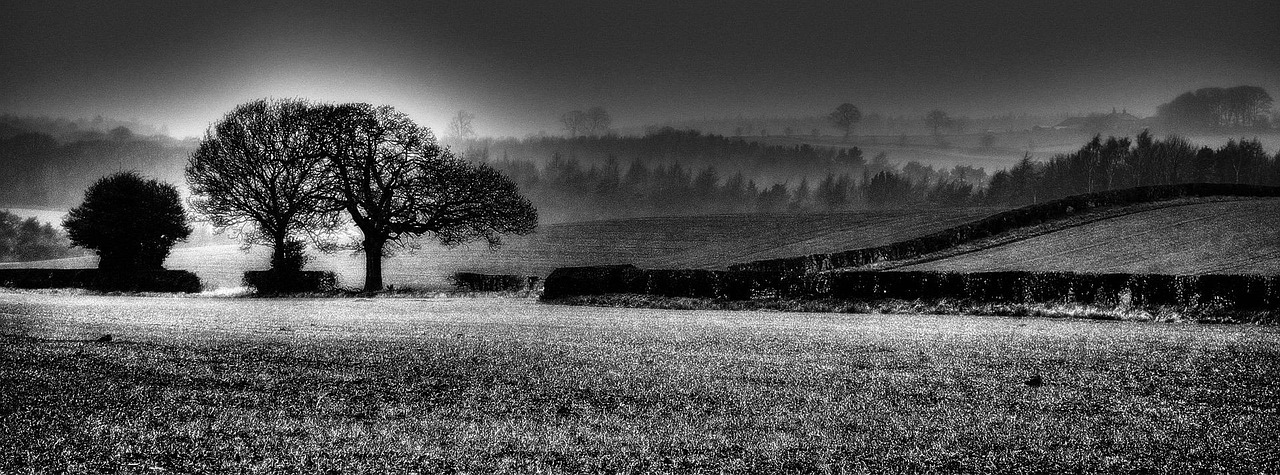
Walk almost anywhere in the older farmlands of Europe or the eastern United States and you will find them: lines of hawthorn, blackthorn, hazel, and dog rose running like seams across the fields. We call them hedgerows, and we tend to treat them as decoration. But for centuries they were infrastructure—the living fence that kept cattle in, marked property lines, broke the wind, and sheltered the crops behind them. A hedge was not planted so much as grown, and a farmer judged his neighbor partly by the straightness and tightness of his hedges.
The craft of hedgelaying is older than most surviving farm buildings. In Britain, the technique of cutting a stem most of the way through and bending it flat—a pleacher, they called it—so that it continues to grow while forming a living barrier, goes back at least to the medieval period and probably earlier. A well-laid hedge could last thirty or forty years before it needed laying again. It was work done in the dead of winter, when the sap was down, and it required a billhook, a hatchet, and a patience that modern farming rarely rewards.
What strikes me most about hedgerows is how much they gave back. A hedge of mixed species—and the old ones almost always were mixed—produced haws and sloes for preserving, nuts for the table, and firewood from the periodic trimming. The base of a hedge, thick with leaf litter and undisturbed soil, was a nursery for insects and small mammals. Songbirds nested in the thorny layers where cats and hawks could not easily reach. The hedge was, in effect, a fence that also happened to be a larder, a windbreak, and a wildlife refuge.
My grandmother, who grew up on a smallholding in the 1930s, remembered her father sending her along the hedge with a basket in autumn to gather hips and haws for syrup. She remembered, too, the annual trimming—the 'brushing'—when neighbors would come with hooks and saws and the cut wood would be bundled for kindling. The hedge was part of the household economy in a way that is hard to explain to anyone who has only seen a tidy post-and-rail fence.
The great removal of hedgerows came in the decades after the Second World War, when governments encouraged farmers to consolidate small fields into larger ones and mechanized equipment demanded straight, wide access. Between the 1950s and the 1980s, tens of thousands of miles of hedge were grubbed out across Britain and parts of Europe. The fields grew bigger and the machinery grew faster, and for a while it seemed like pure progress.
But the losses accumulated quietly. Without hedges, topsoil blew off exposed fields in dry springs. Without the shelter of hedgerow trees, livestock had less shade in summer. Insect and bird populations that depended on the hedgerow corridor—the 'wildlife highway' that connected one wood to the next—fell sharply. Farmers who had once gathered sloes and hazelnuts found themselves buying them instead.
Today hedgerows are being replanted, and hedgelaying societies in Britain and Ireland are teaching the old craft to new hands. It is slow work, and it cannot be done by machine. But there is something reassuring in the revival: a recognition that some of what our grandparents knew about land was not nostalgia but knowledge. The hedge was never just a fence. It was a way of farming that understood the field and the boundary as one thing, and that understood the farmer's job as keeping both alive.
