Rural Life
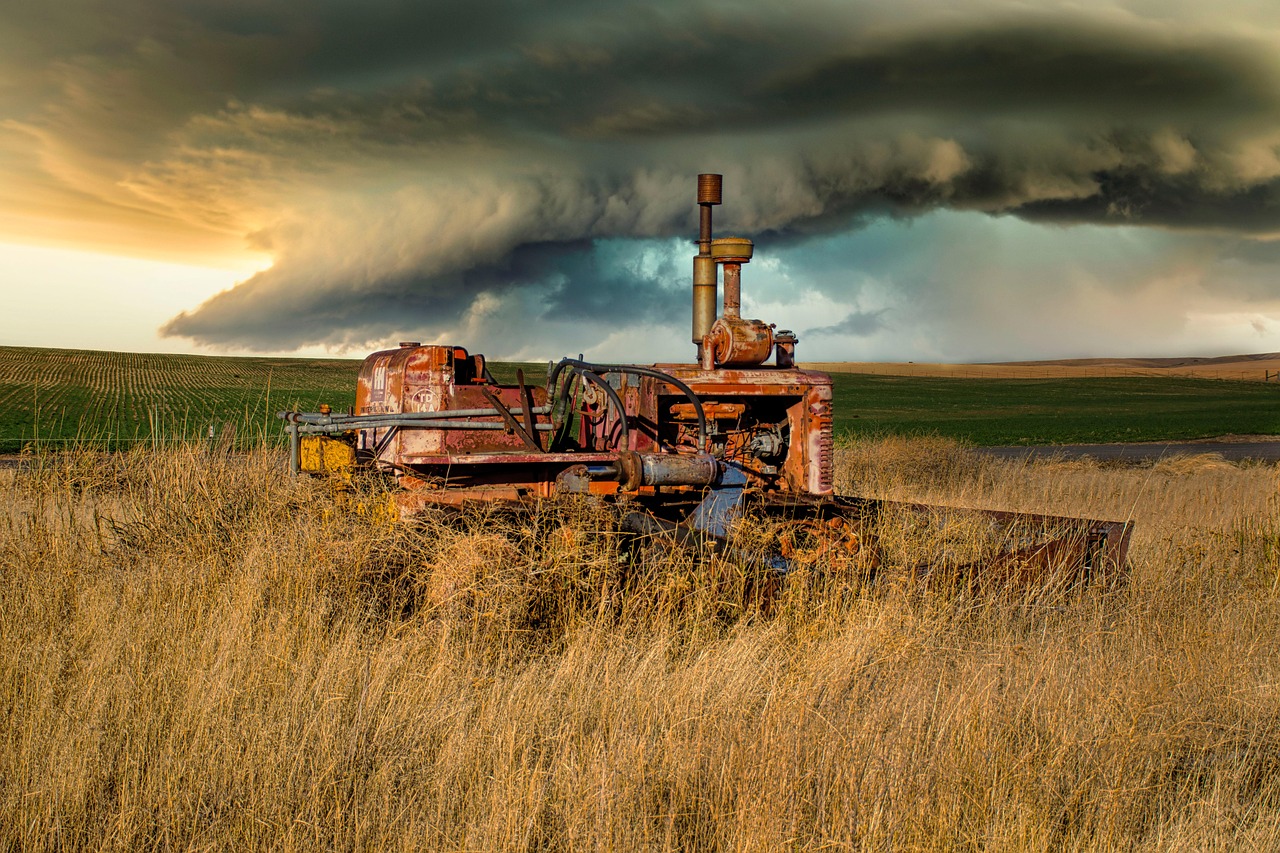
Ask a farmer today about the weather and he will pull out a phone and check a radar app. Ask a farmer in 1850 and he would have looked at the sky, sniffed the air, watched the behavior of his animals, and consulted a set of proverbs that had been passed down for generations. This was not superstition, though some of it was nonsense. Much of it was careful observation of natural signs that modern science has since confirmed.
Weather knowledge was not a hobby for the old farmer. It was a matter of survival. Hay had to be cut and dried before rain came. Grain had to be harvested in a dry window. Livestock had to be moved to high ground before a flood. A farmer who could not read the signs lost crops, and a farmer who lost crops too often lost the farm.
The most reliable signs were in the sky itself. A red sky at sunset, the old rhyme said, was a sailor's delight; a red sky at morning was a warning. The science is sound: weather systems generally move from west to east in the middle latitudes, so a red sky in the east at dawn means the weather has already passed, while a red sky in the west at dusk means clear weather is arriving. The rhyme was not magic; it was pattern recognition.
Clouds told their own stories. Cumulus clouds building into towers by midday suggested afternoon thunderstorms. A halo around the moon meant high cirrus clouds, often a sign of approaching rain. A sudden drop in wind, or a wind that shifted direction, was a warning. Old farmers watched the horizon constantly, noting which way the clouds were moving and how fast.
Animals were also read. Cows would lie down before a storm, not because they sensed rain but because the falling atmospheric pressure made them uncomfortable. Birds would fly low before rain, feeding on insects that were also affected by the pressure. Horses would grow restless. Spiders would leave their webs. None of these signs was infallible, but together they formed a rough system that often worked.
The Farmer's Almanac, first published in North America in 1792, codified much of this folk knowledge into a yearly publication that also included astronomical tables, planting dates, and long-range forecasts. The forecasts were not scientific, but the almanac gave farmers a shared reference point and a way to plan. Many rural households kept a copy in the kitchen, alongside the Bible and the seed catalog.
Proverbs were the other great repository of weather wisdom. 'When the dew is on the grass, rain will never come to pass.' 'When the grass is dry at morning light, look for rain before the night.' 'A coming storm your shooting corns presage.' Some of these were accurate; others were not. But the habit of watching for signs—of paying attention to the world in a disciplined way—was itself valuable. It trained farmers to notice small changes and to think in terms of patterns rather than isolated events.
Modern meteorology has replaced most of this knowledge, and rightly so. A seven-day forecast is more accurate than any proverb. But there is a loss in the transition. The old weather wisdom kept farmers in close conversation with their land. They knew the smell of rain before it came, the feel of a storm in the wind, the particular way the light changed before a front moved through. That kind of attention is hard to maintain when the forecast is always in your pocket.
Some farmers still keep the old ways going, partly out of habit and partly out of respect. They will tell you that the phone is useful but the sky is better. And they are often right.
